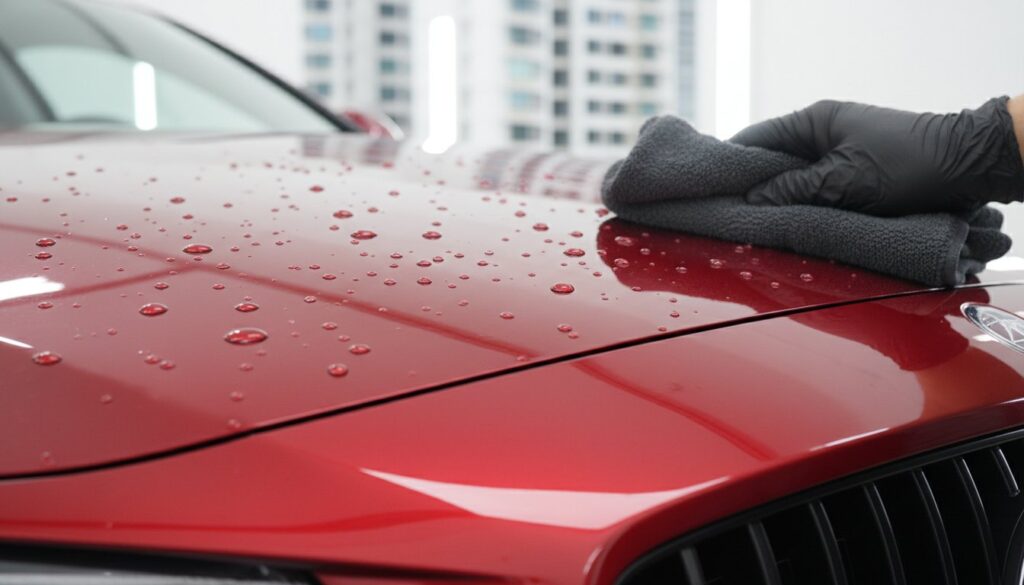
Your car looks spotless after a wash, but a few hours later, you notice white circles, cloudy marks or dull patches across the paintwork. These marks are commonly known as water spots, and they can be particularly frustrating when you want to maintain a clean, glossy finish.
Singapore’s frequent rain, warm weather and humid conditions make proper car washing and drying important. The good news is that the right maintenance routine can help reduce water spotting and preserve your vehicle’s appearance.
In this guide, KlarDetails explains what causes water spots, how to prevent them and when professional car detailing in Singapore may be worth considering.
What Causes Water Spots on Car Paint?
Water spots usually form when droplets evaporate and leave behind dissolved minerals or other contaminants. The visible marks may appear as pale rings, cloudy patches or stubborn stains.
Common causes include:
- Rainwater and environmental contaminants: Water can collect airborne pollutants and other residues before landing on your vehicle.
- Mineral-rich wash water: Dissolved minerals may remain on the surface after droplets dry.
- Washing under direct sunlight: Water can evaporate quickly, leaving less time to dry the vehicle safely.
- Allowing water to air-dry: Droplets left on paint, glass and trim may leave visible deposits.
Not every water spot is the same. Some marks sit on the surface and can be removed with appropriate cleaning, while others may etch into the clear coat and require professional paint correction.
How to Prevent Water Spots on Your Car
1. Wash Your Car in a Shaded Area
Whenever possible, wash your vehicle in a cool, shaded environment. Hot panels can cause water to evaporate quickly, increasing the chance of mineral deposits being left behind.
Work panel by panel rather than allowing the entire vehicle to remain wet while you finish washing the rest.
2. Use Proper Car Shampoo and Washing Tools
Choose a car shampoo designed for automotive paint. Use clean wash mitts and suitable drying towels to reduce the risk of introducing dirt and creating swirl marks.
Avoid household detergents that are not intended for vehicle finishes. Follow the product’s instructions and rinse thoroughly.
3. Dry the Vehicle Promptly
After rinsing, use a clean, soft microfibre drying towel or a suitable car-drying system. Pay attention to mirrors, window edges, door handles and other areas where water tends to collect.
Avoid aggressive rubbing. If a towel picks up dirt, replace or clean it before continuing.
4. Consider a Suitable Paint Protection Coating
Ceramic and graphene coatings can make a vehicle easier to clean and help water bead or run off the surface. However, no coating makes paint completely immune to water spots.
Coating performance depends on the product, surface preparation, environmental conditions and ongoing maintenance. Water can still dry on a coated vehicle and leave mineral deposits.
KlarDetails offers ceramic and graphene coating options for car owners seeking improved gloss and easier maintenance. Ask a detailing specialist which option suits your vehicle and driving habits.
5. Don’t Ignore Existing Water Marks
If water spots remain after a proper wash, avoid using household abrasives, harsh chemicals or aggressive polishing methods without understanding the condition of the paint.
A professional assessment can help determine whether the marks need specialised cleaning, decontamination or paint correction.
Can Water Spots Damage Car Paint?
Yes, some water spots can become more than a cosmetic problem. Mineral deposits may leave visible marks, and certain contaminants can react with the paint surface. If deposits remain for an extended period, they may etch into the clear coat.
The severity depends on the contaminants, the surface condition and how long the marks have been present.
If the marks remain visible after gentle cleaning, have the paint assessed before attempting stronger treatment.
Are Ceramic and Graphene Coatings Worth It for Water Spot Prevention?
Both coating types can help improve water behaviour and make routine washing easier. The right choice depends on your budget, expectations, vehicle condition and willingness to maintain the coating.
A coating should be viewed as a maintenance aid, not a substitute for proper washing and drying. Regular care remains important even when your vehicle has professional paint protection.
You can explore the KlarDetails car detailing services to learn more about the available coating and paint care options.
Frequently Asked Questions
How do I remove water spots from my car in Singapore?
Start with a proper wash using automotive shampoo and clean tools. If the marks remain, seek professional advice to determine whether specialised water-spot treatment or paint correction is needed.
Does rain damage car paint?
Rain itself does not automatically damage paint. However, contaminants in rainwater and droplets left to evaporate can contribute to spotting. Bird droppings and other deposits can also damage the finish if left untreated.
Does graphene coating prevent water spots completely?
No. Graphene coating may improve water repellency and make cleaning easier, but mineral deposits can still form. Proper washing, drying and maintenance are essential.
Should I polish water spots myself?
Minor deposits may respond to appropriate cleaning, but etched marks may need professional correction. Avoid abrasive polishing unless you understand the paint condition and the risks.
Keep Your Car’s Finish Looking Its Best with KlarDetails
A consistent washing and drying routine is one of the simplest ways to reduce water spots and maintain your vehicle’s appearance. When marks become stubborn, professional assessment can help you choose the right treatment without unnecessary polishing.
KlarDetails provides car detailing and paint protection services in Singapore, including ceramic and graphene coating options.
Want to improve your car’s finish? Visit KlarDetails to explore available services and enquire about a suitable treatment.
