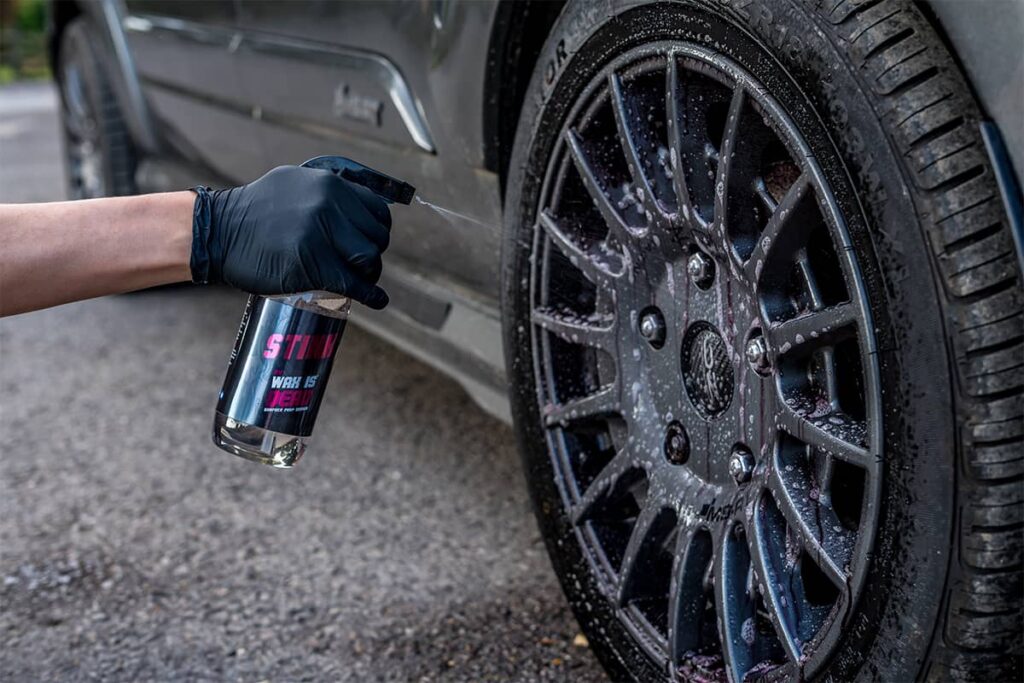
Your car’s wheels can become dirty even when the bodywork looks clean. Dark deposits around the spokes, stubborn marks near the wheel nuts and a dull finish are often caused by a mixture of brake dust, road grime and other contaminants.
Regular wheel cleaning helps maintain your vehicle’s appearance, but using the wrong products or tools can damage certain wheel finishes. Here is how to approach wheel cleaning safely.
What causes brake dust to build up on car wheels?
When you apply the brakes, friction between braking components produces wear particles. These particles can collect on the wheels alongside road dirt and other environmental contaminants.
Brake dust accumulation varies according to the vehicle, braking components, driving conditions and wheel design. Wheels with intricate spokes may be harder to clean because dirt can collect in narrow spaces.
How do you remove brake dust safely?
1. Let the wheels cool
Never apply cleaning products to excessively hot wheels. Allow them to cool before starting, and follow the cleaner manufacturer’s safety instructions.
2. Choose a wheel-safe cleaning product
Select a cleaner compatible with your wheel’s finish. Painted, polished, chrome, anodised and other specialist finishes may have different care requirements.
If you are unsure which product is suitable, consult the wheel manufacturer or a detailing professional.
3. Rinse away loose dirt
Rinse the wheels first to remove loose particles. This helps reduce the risk of dragging grit across the surface during cleaning.
4. Use soft, suitable brushes
Use a wheel brush or detailing brush designed for the job. Clean the spokes, inner barrel and accessible areas gently without scratching the finish.
Avoid abrasive pads and improvised metal tools.
5. Rinse thoroughly and dry
Remove the cleaning solution completely according to the product instructions. Drying with a clean, suitable microfiber towel can help reduce water marks.
Follow any additional instructions required for specialist finishes.
What happens if brake dust is left on alloy wheels?
Accumulated brake dust and road contamination can make wheels look dull and become harder to clean. Depending on the wheel finish and contaminant, prolonged exposure may contribute to staining or surface damage.
Regular cleaning helps prevent excessive buildup, but it cannot reverse every type of corrosion, etched mark or damaged coating.
Can you use the same cleaner on every type of wheel?
No. Some wheel cleaners are designed for specific finishes, and certain products may be unsuitable for polished, uncoated or otherwise sensitive surfaces.
Always check compatibility before application and follow the instructions. Never mix cleaning chemicals or use an aggressive product simply because the dirt is difficult to remove.
How often should car wheels be cleaned in Singapore?
Cleaning frequency depends on driving habits, brake dust accumulation, weather and parking conditions. Inspect your wheels during routine car washing and clean them when dirt begins to build up.
Regular gentle cleaning is generally preferable to waiting until deposits become stubborn and require more intensive treatment.
When should you consider professional wheel detailing?
Professional detailing may be useful if your wheels have stubborn contamination, complex spoke designs or a delicate finish that requires specialised care.
If the surface is already corroded, peeling or scratched, cleaning alone may not restore its original appearance. A professional assessment can help distinguish removable contamination from permanent damage.
Give your wheels the right care with KlarDetails
KlarDetails offers automotive detailing services in Singapore. If your wheels need more than routine washing, contact the team to discuss appropriate cleaning and detailing options for your vehicle’s finish.
Explore KlarDetails’ services or contact the team to enquire about your car detailing requirements.
