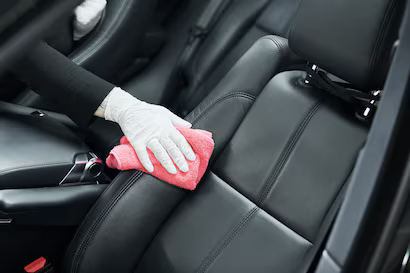
Leather seats can give a car’s interior a refined appearance, but they need appropriate care to remain clean and comfortable. Dust, body oils, spills and friction from everyday use can gradually affect the surface.
In Singapore, frequent vehicle use and warm conditions make routine interior care especially useful. The key is to clean leather gently and choose products suited to the specific material and finish.
Why do leather car seats become dirty or worn?
Several everyday factors contribute to changes in leather seats:
- Body oils and perspiration: Contact with skin can leave residue on frequently used areas.
- Dust and dirt: Particles accumulate in seams, creases and perforations.
- Spills: Drinks and food can leave stains if not cleaned appropriately.
- Friction: Repeated entry and exit can wear the driver’s seat bolsters.
- Sun exposure: Heat and sunlight may contribute to fading or deterioration over time.
Not all seats described as leather are made from the same material. Some vehicles use coated leather, synthetic leather or mixed upholstery, so the correct cleaning method depends on the manufacturer’s specifications.
How should you clean leather car seats?
Step 1: Remove loose dirt
Vacuum the seats gently, paying attention to seams and creases. Use a suitable attachment to avoid scratching the surface.
Step 2: Choose an appropriate cleaner
Use a product intended for the seat material and follow its instructions. Test it on a small, inconspicuous area first if recommended by the manufacturer.
Step 3: Clean gently
Apply the cleaner as directed and use a soft cloth or suitable brush. Avoid soaking the upholstery, especially around seams and perforations.
Step 4: Remove residue
Wipe away remaining product with a clean cloth, following the product instructions. Allow the seats to dry properly before normal use.
Step 5: Follow the manufacturer’s care advice
Some leather surfaces require a particular protectant, while others have a factory-applied finish that does not need conventional conditioning products. Avoid applying products indiscriminately.
What should you avoid when cleaning leather seats?
Common mistakes include using harsh household chemicals, abrasive brushes, excessive water or unapproved cleaning products. These can damage the surface finish or leave residue.
Be careful with heavily advertised conditioners and shine products. A glossy appearance does not necessarily mean the seat is cleaner or better protected.
If a stain is persistent, the surface is cracking or the colour appears to be wearing away, repeated scrubbing may make the problem worse. Professional assessment is the safer option.
How often should leather car seats be cleaned?
There is no single schedule for every vehicle. Cleaning frequency depends on how often the car is used, whether passengers frequently eat inside it and how quickly dirt accumulates.
Remove spills promptly using a suitable method, wipe away everyday dust and inspect high-contact areas regularly. Periodic deeper cleaning may be appropriate when normal maintenance no longer keeps the seats clean.
Can professional interior detailing help?
Professional interior detailing can help remove accumulated dirt and address areas that are difficult to clean using routine methods. The appropriate treatment depends on the upholstery material, stain type and condition.
However, detailing cannot guarantee that every stain, crack or worn area can be restored. Damaged material may need specialist repair or replacement.
Keep your car interior looking its best with KlarDetails
KlarDetails provides car detailing services in Singapore, including interior care. If your seats have persistent stains, heavy soiling or delicate finishes, ask the team which treatment is suitable for your vehicle.
Explore KlarDetails’ detailing services or contact KlarDetails to discuss your interior cleaning needs.
