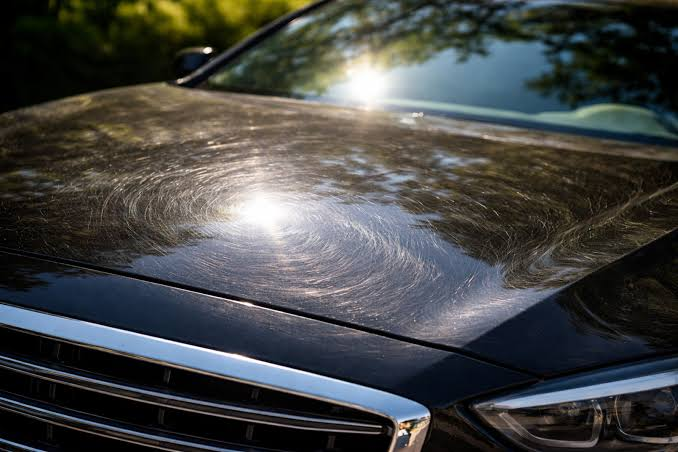
Your car looks clean after a wash, but under bright sunlight or workshop lighting, the paint seems covered in fine circular scratches. The finish no longer looks as deep or glossy as it once did.
These marks are commonly called swirl marks. They are often associated with improper washing, drying or wiping techniques and can become more noticeable on darker paint colours.
The good news is that many light defects can be reduced with suitable techniques and professional assessment. Even better, changing how you wash your vehicle can help prevent new marks from forming.
Quick Answer: What Causes Swirl Marks on Car Paint?
Swirl marks are fine scratches or surface defects that become visible when light reflects off the paint. Common causes include washing with dirty materials, rubbing grit across the surface, using unsuitable brushes and drying the car with rough or contaminated towels.
To prevent them, rinse away loose dirt first, use clean microfibre materials, wash gently and dry with suitable equipment. Existing defects may require professional paint correction, depending on their depth and severity.
1. Washing a Dirty Car Without Pre-Rinsing
Dust and road grime can contain particles that scratch the surface when dragged across the paint.
If you immediately begin wiping a dirty panel with a wash mitt, those particles may move across the clear coat and create fine defects.
How to prevent it:
- Rinse the vehicle thoroughly before contact washing.
- Use suitable cleaning products to loosen dirt.
- Avoid wiping dry or heavily soiled paint.
- Rinse wash materials regularly during the process.
The goal is to remove as much loose contamination as possible before touching the paint.
2. Using Dirty Towels or Wash Mitts
A microfibre towel is only helpful when it is clean and in good condition.
Materials that contain trapped grit, hardened dirt or residue can scratch the finish. Towels used on wheels or heavily soiled areas should not be reused on the painted body without proper cleaning.
Better practice: Use clean, paint-safe wash materials, separate wheel-cleaning tools from bodywork tools, and replace worn or contaminated towels.
3. Using Automatic Car Washes With Brushes
Some automated car washes use rotating brushes or other contact mechanisms. If their cleaning materials contain trapped dirt or are poorly maintained, they may contribute to surface marring.
Not every automatic wash causes damage, and the risk depends on the equipment, maintenance and washing process.
If maintaining a high-gloss finish is a priority, choose a wash method that minimises unnecessary contact and uses clean materials.
4. Drying the Car With Too Much Pressure
Swirl marks can form during drying as well as washing.
Dragging a dry towel across a surface that still contains dirt or mineral deposits may introduce scratches. Rough towels and excessive pressure can make the problem worse.
To reduce risk, rinse thoroughly and use a clean, soft drying towel or suitable air-drying equipment. Avoid repeatedly rubbing stubborn spots.
5. Using the Wrong Cleaning Products
Harsh or abrasive cleaning products may be unsuitable for automotive paint, protective coatings and trim.
Household sponges, rough cloths and abrasive pads can also introduce defects.
Choose automotive products designed for the surface being cleaned and follow the instructions. If you are unsure whether a product is safe for a coated vehicle, check with the coating provider.
How Can You Check for Swirl Marks?
Swirl marks are often easiest to see when light reflects at an angle.
Look for:
- Fine circular or spiderweb-like patterns.
- Hazy reflections under direct sunlight.
- Fine scratches visible under inspection lighting.
- Reduced clarity or gloss despite a clean surface.
Do not confuse every mark with a swirl scratch. Water spots, residue, deeper scratches and paint defects can look similar. Proper inspection helps identify the correct treatment.
Can Paint Correction Remove Swirl Marks?
Paint correction uses controlled polishing techniques to improve the appearance of suitable paint defects. Depending on their depth and the condition of the clear coat, some swirl marks can be reduced significantly.
However, paint correction is not simply a matter of polishing harder. Automotive clear coat has limited thickness, so unnecessary abrasion can cause more harm than good.
A professional detailer should assess the paint condition and recommend a suitable approach. Deep scratches may not be safely removable through polishing alone.
Learn more about KlarDetails’ exterior detailing and paint correction-related services.
Does Ceramic or Graphene Coating Prevent Swirl Marks?
Ceramic and graphene coatings can provide a protective surface and may make routine cleaning easier. They do not make paint scratch-proof.
Swirl marks can still occur if the vehicle is washed with contaminated materials, wiped aggressively or exposed to abrasive contact.
Proper washing techniques remain essential even after a coating has been applied. A coating should be considered part of a paint-care plan, not a replacement for careful maintenance.
A Simple Routine to Help Prevent Swirl Marks
Follow these steps whenever you wash your vehicle:
- Park in a suitable shaded area and allow hot panels to cool.
- Rinse away loose dirt before touching the paint.
- Use automotive shampoo and clean wash materials.
- Work in manageable sections without excessive pressure.
- Rinse thoroughly to remove cleaning residue.
- Dry with a clean, soft towel or suitable drying equipment.
- Inspect the finish under good lighting.
- Remove bird droppings and other contaminants safely rather than rubbing them dry.
Consistency is more useful than relying on a single premium product.
Frequently Asked Questions
Are swirl marks permanent?
They may be reduced through suitable paint correction if the defects are within a safely correctable part of the finish. Deeper damage may remain, and not every defect can be removed completely.
Are black cars more likely to get swirl marks?
Swirl marks can occur on any paint colour. They are often more visible on black and other dark colours because of the way light and reflections reveal surface defects.
Does waxing remove swirl marks?
Wax may temporarily make some defects less noticeable, but it generally does not correct the underlying scratches. Proper assessment is needed to determine whether polishing is appropriate.
Will ceramic coating hide existing swirl marks?
A coating is not a substitute for paint correction. Existing defects may remain visible unless they are addressed before coating application.
How can I keep my car looking glossy for longer?
Use safe washing and drying techniques, remove contaminants promptly, maintain suitable paint protection and arrange professional inspection when the finish develops persistent defects.
Restore Clarity and Protect Your Paint With KlarDetails
Swirl marks can reduce the depth and clarity of your vehicle’s finish, but many are preventable with proper washing and drying methods. When defects are already visible, a professional paint assessment can help determine whether correction is suitable.
Explore KlarDetails’ exterior detailing and paint protection services to learn more about maintaining your vehicle’s finish in Singapore.
Contact KlarDetails — Because Every Detail Counts.
