

Clean leather seats gently and regularly: vacuum, wipe with a pH-balanced leather cleaner, agitate softly, wipe off residue, then condition. Avoid harsh chemicals and soaking. Light, frequent care keeps leather soft and prevents the cracking that heat and neglect cause.
Why does leather need special care?
Leather is a natural material, usually finished with a protective surface layer. Heat dries it, sweat and body oils soil it, and dyed clothing such as jeans can transfer colour.
In Singapore, a car parked in the sun can get very hot inside, and humid air encourages grime and odour in the grain. Left alone, the leather stiffens, fades and may crack.
How do you clean leather seats step by step?
- Vacuum the seats, including seams and gaps, using a soft brush attachment so grit does not scratch the surface.
- Apply a pH-balanced leather cleaner to a microfibre cloth or soft brush, not directly onto the seat.
- Agitate gently in small sections, letting the cleaner lift dirt from the grain.
- Wipe away residue with a clean, slightly damp microfibre cloth, then dry.
- Apply a thin coat of leather conditioner, and let it absorb before wiping off any excess.
Work in shade, on a cool seat. Test any product on a hidden area first.
What should you avoid?
- Household cleaners, bleach, alcohol and strong degreasers, which strip the finish.
- Soaking the leather, which can seep into stitching and foam.
- Stiff brushes and abrasive pads.
- Heavy, greasy conditioners that leave a slippery or sticky surface.
- Leaving spills to dry. Blot them quickly instead of rubbing.
Perforated seats need extra caution, since liquid can enter the holes.
How often should you clean and condition?
A light wipe-down every few weeks keeps dirt from settling in, and a fuller clean and condition suits most cars every few months. Cars with heavy use, children or private-hire passengers need more frequent attention.
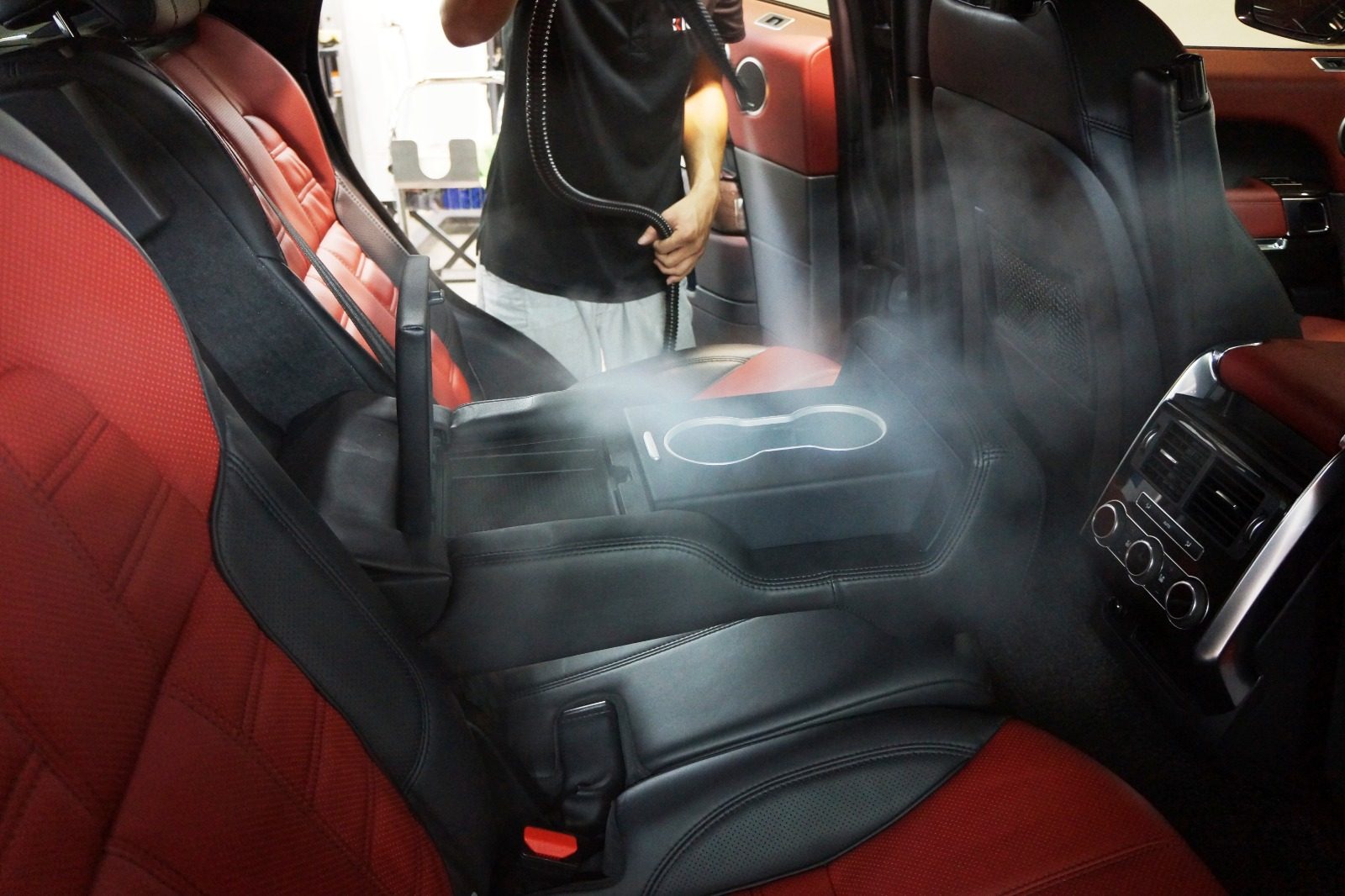
As part of a full interior detail on a 6 to 12 month cycle, the leather is cleaned and treated with the rest of the cabin. Our interior detailing service uses controlled-pressure steam and material-appropriate products.
What if the leather is already damaged?
Light surface wear and dullness often respond well to proper cleaning and conditioning. Cracks, tears and colour loss are different, since these need repair or re-dyeing and cleaning cannot reverse them.
Want a wider view of what a cabin clean should cover? Read our interior detailing guide for Singapore.
Questions
Can I use baby wipes on leather seats?
They are fine for a quick wipe of a fresh spill, but regular use can leave residue and slowly dry the surface. A proper pH-balanced leather cleaner and a conditioner are a better choice for routine care. Always test any product on a hidden area of the seat first.
Do I need to condition leather every time I clean it?
Not always. Conditioning after a fuller clean helps replace lost moisture and keeps the leather supple. Over-conditioning leaves a greasy or slippery feel, so use a thin layer, let it absorb, and wipe off the excess. Light wipe-downs in between do not need conditioner.
How do I remove jeans dye transfer?
Fresh transfer often lifts with a leather cleaner and a soft cloth, worked gently. Older, set-in dye is harder and may need professional treatment, as strong rubbing can damage the finish. Act early, and avoid harsh solvents that can strip colour from the seat itself.
Is steam safe for leather?
Controlled steam used correctly and briefly is safe, and our technicians adjust the method for the material. Excess heat or moisture in untrained hands can harm leather, so this is not something we would suggest trying with a household steamer. Our interior service is designed around controlled pressure.
Related service
Interior DetailingKlarINTERIOR